
The market for infant care is unlike any other sector in the consumer electronics industry. It is a marketplace driven not just by necessity, but by profound emotion and an uncompromising demand for safety. When a parent purchases a device to monitor their sleeping child or purify the air in a nursery, they are buying a promise of protection. For brands operating in this space, the choice of a baby care products manufacturer is the single most critical factor in fulfilling that promise. It is the bridge between a concept on a drawing board and a reliable, certified device that families trust during the most vulnerable moments of their lives.
The Hierarchy of Safety: Compliance as a Culture
In general electronics, a device failure is an inconvenience. In baby care, it is unacceptable. This reality dictates that manufacturing protocols must go far beyond standard quality control. They must adhere to a culture of absolute safety.
A premier manufacturer understands the complex web of global regulations that govern this sector. From the CPSIA in the United States to the rigorous EN standards of the European Union, compliance is non-negotiable. This involves meticulous material selection—ensuring plastics are BPA-free, paints are non-toxic, and small parts are secured against choking hazards.
However, electronic safety is equally paramount. As devices become more powerful, thermal management becomes critical. A baby monitor or night light must run cool to the touch, even after hours of continuous operation. Battery safety is another major focus, requiring redundant protection circuits to prevent overheating or leakage. Facilities like Techwall Electronics operate under ISO 9001 standards to ensure that every step, from component sourcing to final assembly, is documented, tested, and verifiable. This level of traceability is the only way to mitigate risk and ensure that the final product is as safe as it is functional.
Innovation in the Nursery: The Shift to "Smart" Care
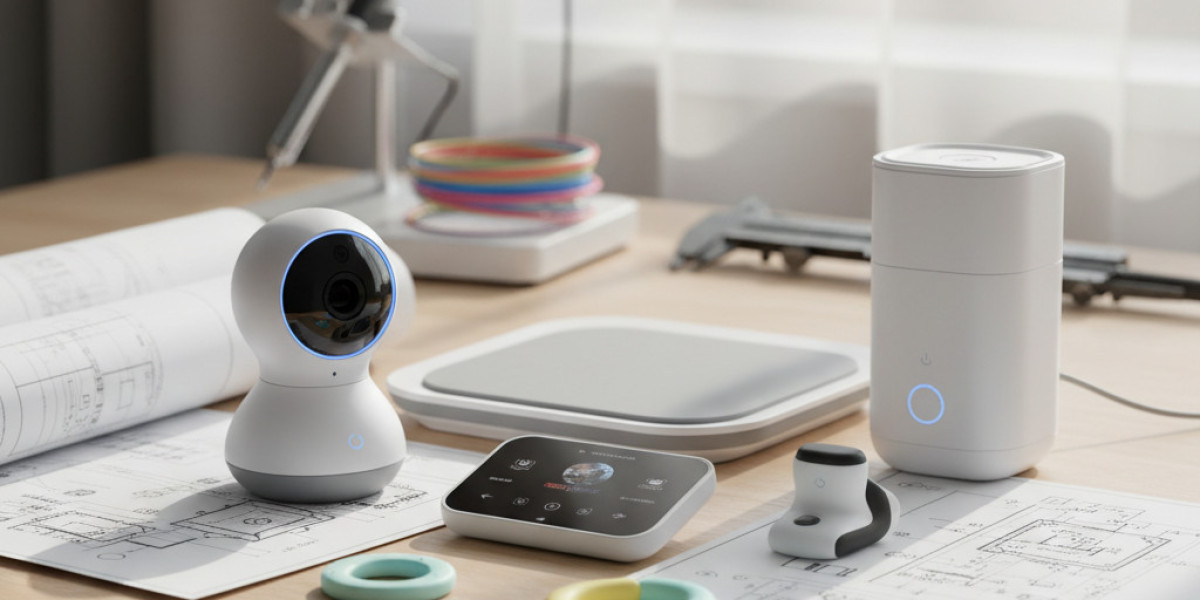
The modern nursery is undergoing a digital transformation. The era of simple, one-way audio monitors is rapidly evolving into an ecosystem of interconnected IoT (Internet of Things) devices. Today's parents are data-savvy and look for technology that offers insights, not just observation.
This shift places new demands on manufacturers. It is no longer enough to be good at plastic injection molding and basic circuit assembly. The best manufacturers are now technology partners capable of integrating complex sensors and connectivity solutions.
Precision Sensing: Devices like the Techwall BSM-1 movement sensor rely on non-contact technology to detect subtle respiratory movements. Manufacturing these requires high-precision calibration to distinguish between a baby's breathing and background noise, eliminating false alarms that cause parental anxiety.
Environmental Intelligence: The demand for clean air has led to innovations like the BAP-1 and BAP-2 portable air purifiers. Manufacturing these involves optimizing airflow dynamics in compact form factors, ensuring they are whisper-quiet so as not to disturb sleep while effectively filtering allergens.
Integrated Firmware: As hardware becomes smarter, software becomes the differentiator. A manufacturer must offer robust R&D capabilities to develop stable firmware that handles Wi-Fi connectivity, data encryption (crucial for privacy), and seamless app integration.
The ODM/OEM Advantage: From Sketch to Scale
For brands looking to enter or expand in the baby care market, the path from concept to shelf is fraught with technical hurdles. This is where Original Design Manufacturing (ODM) and Original Equipment Manufacturing (OEM) services become invaluable.
A specialized manufacturer acts as an incubator for innovation. They employ "Design for Manufacturing" (DFM) principles early in the development process. This means engineers review a product concept not just for how it looks, but for how it can be built efficiently and reliably. They might suggest altering a casing design to improve durability during drops or changing a component to improve battery life without increasing cost.
This collaborative approach allows brands to scale quickly. Instead of building a factory and an engineering team from scratch, a brand can leverage the manufacturer's existing infrastructure—their testing labs, their supply chain relationships, and their assembly lines. This reduces time-to-market significantly, allowing brands to capture trends (like the surge in travel-friendly baby electronics) while the window of opportunity is open.
Reliability Testing: Simulating the Real World
A baby product must withstand a unique set of environmental stressors. It might be knocked off a changing table, chewed on, or subjected to high humidity near a humidifier.
Top-tier manufacturers employ rigorous stress testing protocols that simulate years of use in a matter of weeks. Drop tests ensure structural integrity. Button-press tests verify that controls won't fail after thousands of uses. Environmental chambers test the electronics against extreme temperatures and humidity levels.
For products like bedwetting alarms (such as the BWA-1), sensitivity testing is crucial. The sensor must be responsive enough to detect moisture immediately but robust enough to resist false triggers from sweat or movement. It is this attention to the "micro-details" of performance that separates a generic product from a market leader.
Building for the Future
The relationship between a brand and its manufacturer is a partnership in every sense of the word. As the baby care market continues to grow, driven by an increasing focus on child health and smart home integration, the role of the manufacturer will only expand. They are the silent architects behind the peace of mind that parents rely on every day. By combining engineering excellence with a deep understanding of the unique needs of families, manufacturers like Techwall ensure that the next generation of baby products is safer, smarter, and more supportive than ever before.