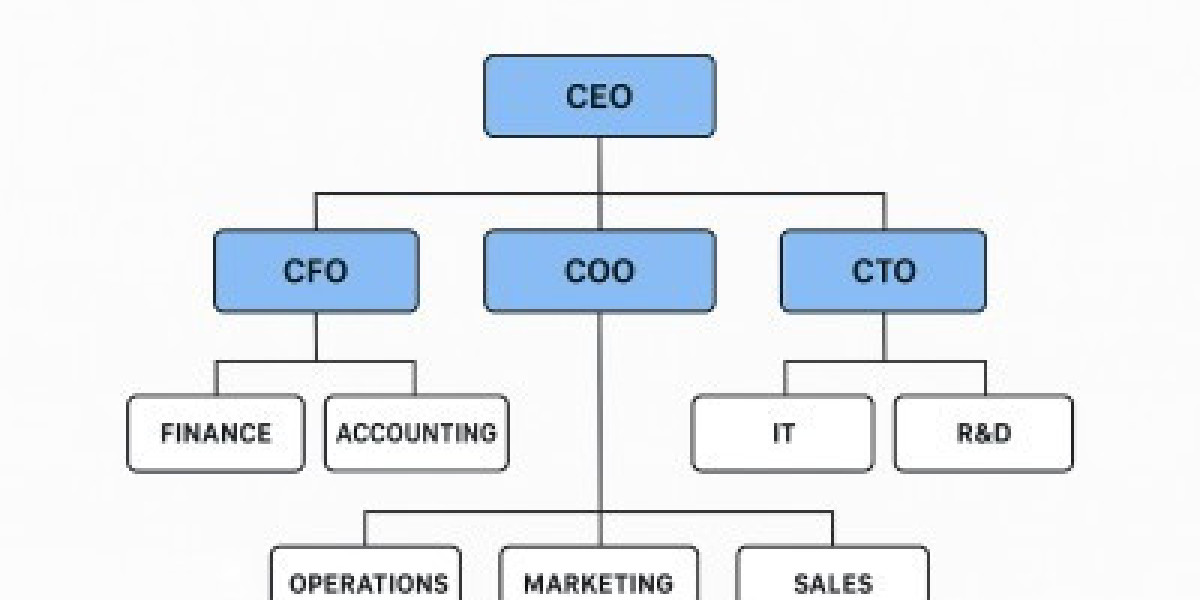

In today’s competitive home improvement landscape—especially in areas such as interior paint selection, customer guidance, and project fulfillment—organizations are looking for ways to streamline operations and improve the customer experience. One useful but often overlooked tool is the actionable org chart. Unlike a traditional organizational chart that simply shows reporting lines, an actionable org chart maps responsibilities, workflows, decision points, and accountability in a way that supports day-to-day execution.
Whether a business provides paint products, offers interior design consultations, manages warehouse inventory, or supports homeowners in choosing finishes and colors, clarity of roles affects effectiveness. An actionable org chart helps ensure that customers receive accurate recommendations, orders are processed efficiently, and projects move smoothly from inquiry to completion.
What Makes an Org Chart “Actionable”?
A typical org chart answers the question: Who reports to whom?
An actionable org chart goes further and answers:
Who is responsible for what tasks?
Where do decisions happen?
How do teams collaborate across functions?
What happens when an issue arises in the workflow?
This distinction makes a meaningful difference. For example, in a business that offers interior paint products, multiple departments may touch the customer journey:
Product sourcing
Technical paint guidance
Color consultation support
Retail or online sales
Delivery logistics
After-purchase assistance
If responsibilities overlap or remain vague, customers may receive inconsistent information about application methods, finishes, durability, VOC ratings, or surface prep. An actionable org chart prevents confusion and supports a unified service approach.
Benefits of an Actionable Org Chart in the Interior Paint Sector
1. Improved Customer Experience
Interior paint buyers often rely on expert guidance—choosing between matte, satin, eggshell, or gloss, understanding coverage needs, or determining the right paint for high-traffic areas. When employees know exactly who provides expertise and handles inquiries, customers receive faster and more accurate support.
2. Operational Efficiency
Inventory management, shade matching tools, and supply coordination all require structured workflows. An actionable org chart reduces bottlenecks and ensures tasks are not duplicated or neglected.
3. Stronger Collaboration Across Teams
Sales may need input from product specialists; project advisors may rely on manufacturer data; fulfillment teams may require updated stock information. Clarity of responsibility supports collaboration without friction.
4. Better Training and Onboarding
The home improvement industry faces seasonal staffing changes. With an actionable org chart, new employees learn:
where their role fits,
who they rely on,
what expectations they must meet.
5. Accountability and Quality Control
Interior paint products are highly sensitive to accuracy—mismatched color codes, improper recommendations, or incorrect surface advice can harm customer trust. Clear accountability reduces errors.
How to Build an Actionable Org Chart
Creating one doesn’t require software complexity—it requires intention. Here are practical steps:
Step 1: Define Core Functions
Instead of building around titles, start with functions:
Customer education
Product knowledge
Color and finish guidance
Order processing
Store or warehouse support
Marketing communication
After-sales service
Step 2: Map Responsibilities
Each task must have a designated owner, even if shared.
Step 3: Identify Workflow Connections
Consider how customer needs move through the organization. For example:
Customer asks about low-odor interior paint.
Sales receives inquiry.
Product expert confirms suitability.
Stock control checks availability.
Logistics schedules fulfillment.
Step 4: Highlight Decision Authority
Employees need to know:
who approves special orders,
who handles returns,
who resolves product claims.
Step 5: Make it Accessible and Updatable
An actionable org chart only works if people use it. It should be:
easy to read,
shared across teams,
updated when responsibilities change.
Examples of How an Actionable Org Chart Helps in Real Scenarios
Scenario A: Paint Color Matching Request
A customer brings a fabric sample and wants a matching wall color. With an actionable org chart:
Sales knows who handles matching requests.
Color specialists receive the task.
Communication flows smoothly.
Expectations are clear and documented.
Scenario B: Large Bulk Order for Interior Renovation
Without clear role definitions, bulk orders may cause confusion. With an actionable org chart:
Procurement validates volume availability.
Sales manages customer communication.
Logistics schedules delivery.
Scenario C: Product Complaint or Finish Issue
Actionable org charts define escalation procedures, preventing frustration and delays.
Best Practices for Maintaining an Actionable Org Chart
Review quarterly — roles evolve as product lines grow.
Align with business goals — such as expanding eco-friendly paint options.
Include cross-functional visibility — especially between customer guidance and product experts.
Use language employees understand — avoid jargon.
Connect it to training programs — make it part of onboarding.