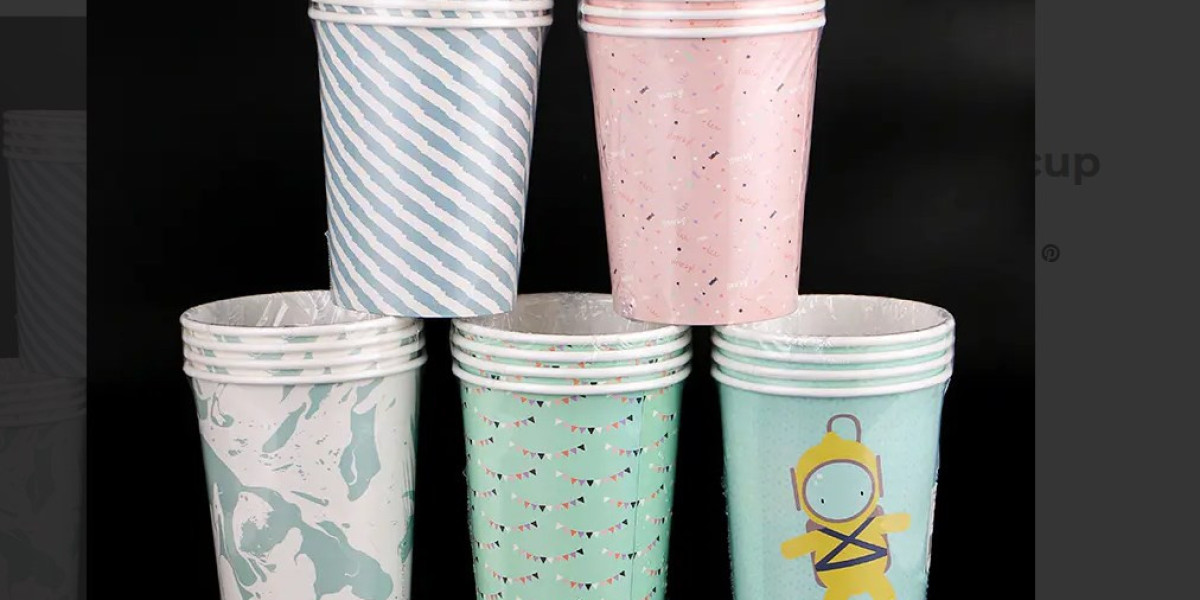

Introduction to Stackability and Storage
The stackability and storage convenience of a Disposable Paper Cup are critical factors in both manufacturing and end-user applications. Efficient stacking reduces storage space requirements, simplifies transportation, and enhances operational efficiency for businesses such as coffee shops, restaurants, and event catering. Poor stackability can lead to wasted space, increased risk of cup deformation, and higher labor costs during handling. Understanding the design features that contribute to effective stacking is essential for manufacturers and consumers alike.
Design Factors Affecting Stackability
The geometry of the cup plays a significant role in determining how well it stacks. Tapered sidewalls allow cups to nest inside one another with minimal friction, reducing the effort required to separate them during use. Uniform dimensions and precise manufacturing tolerances are necessary to ensure that cups do not become stuck or jammed. Additionally, the rim and base shape must be designed to support the weight of stacked cups without causing buckling or deformation of the lower layers.
Material and Structural Considerations
The material thickness and stiffness of a Disposable Paper Cup influence its stackability and durability during storage. Cups that are too thin may collapse under the weight of a tall stack, while excessively thick cups increase storage volume and material costs. Reinforced bases or specially coated walls can enhance structural integrity, allowing for higher stacks without compromising the cup’s shape. The balance between rigidity and nestability is crucial for practical storage solutions.
Impact on Transportation and Inventory Management
Good stackability reduces the volume occupied by cups in storage, which directly lowers transportation costs and simplifies inventory management. Businesses can store more units in a given space and move them more efficiently between locations. Stacked cups are also easier to count and organize, which helps in tracking stock levels and reducing the likelihood of shortages or overstocking. Efficient stacking supports both warehouse and point-of-sale operations, improving overall logistical efficiency.
User Experience and Operational Efficiency
For end-users, stackable cups provide convenience during service. Baristas or catering staff can quickly access and separate individual cups without disrupting the stack, saving time during high-demand periods. Properly designed stacking minimizes the risk of cups tipping over or falling, which enhances safety and reduces waste. Stackable cups also simplify setup for large events, allowing for faster preparation and a cleaner presentation.
Challenges and Solutions
Despite the benefits, certain challenges may arise in designing stackable paper cups. Excessive nesting friction can make cups difficult to separate, while irregularities in shape or coating can prevent proper alignment. Manufacturers address these issues through precise molding, quality control, and surface treatments that reduce adhesion between cups. Some designs incorporate anti-stick rims or slight variations in taper to improve separation while maintaining compact nesting.
Conclusion on Stackability and Storage Convenience
In conclusion, the stackability and storage convenience of a Disposable Paper Cup are determined by a combination of design geometry, material properties, and manufacturing precision. Effective stacking improves storage efficiency, reduces transportation costs, and enhances operational convenience for both businesses and end-users. By carefully balancing cup stiffness, taper angle, and surface finish, manufacturers can create cups that are easy to handle, safe, and practical for high-volume applications. Stackable cups not only optimize logistics but also improve the overall user experience, making these design considerations essential in product development and commercial use.